86-592-5659128 (to8016)
anna@xmydx.com English
 Deutsch
 español

20 YEARS Silicone manufacturer
86-592-5659128 (to8016)
anna@xmydx.com
20 YEARS Silicone manufacturer



2026-11-06 11:40:50
Short answer: Choose a Chinese silicone manufacturer by verifying four things in this order — that they own the factory, that they can review your drawing, that they test what they ship, and that your tooling and IP stay yours. Price comes fourth. Most sourcing failures are not price failures; they are verification failures.
Below is the checklist we would use ourselves, plus the red flags that should end a conversation early.
• Verify factory ownership before price: onsite report, matching legal entity, matching address.
• Send a STEP file and watch whether they comment on moldability — that separates factories from traders.
• Ask for QC independence and a written inspection report per lot.
• Put tooling ownership, IP terms and no-subcontracting in the contract before the first sample.
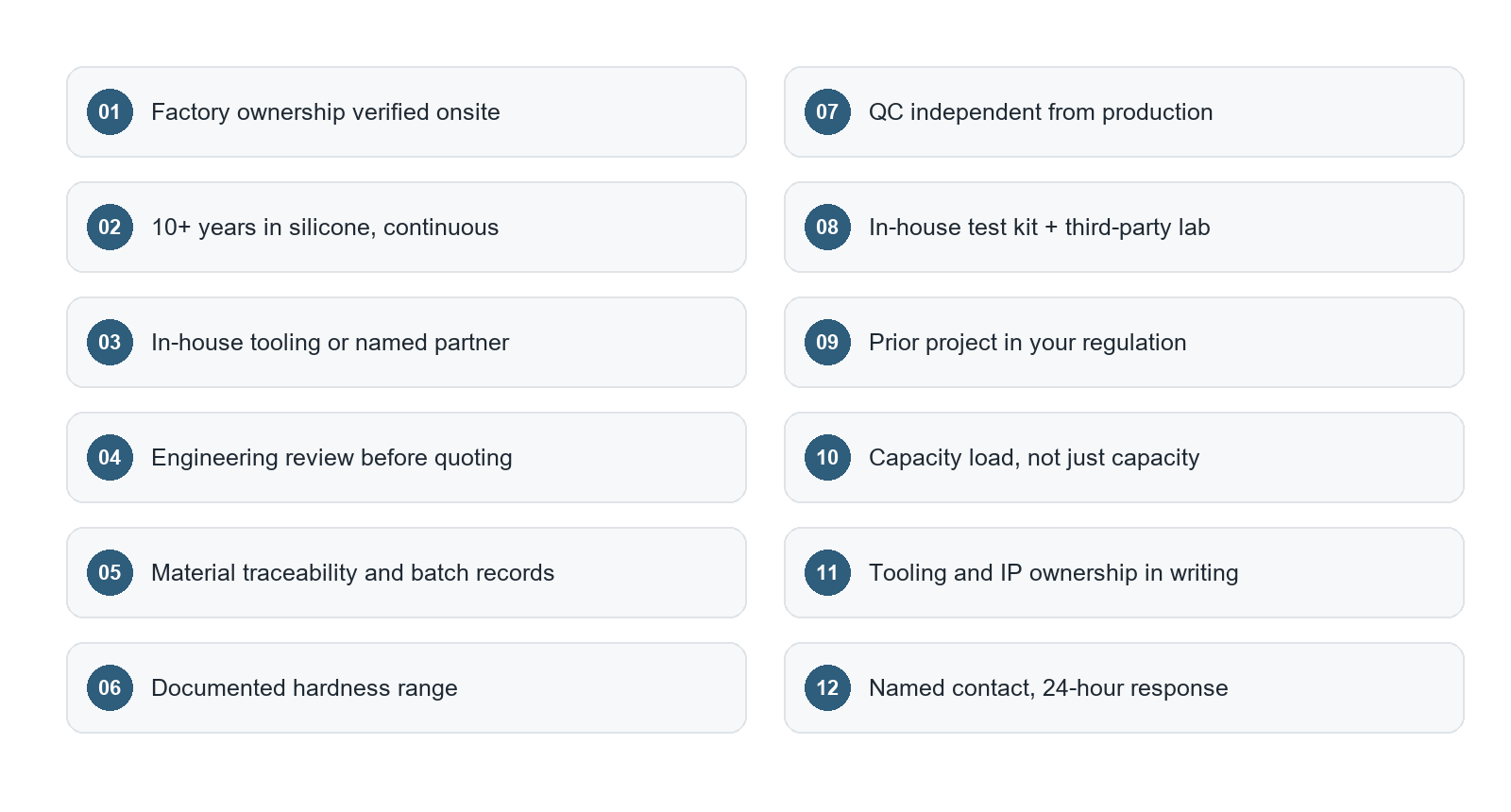
Figure 1. The 12 checks, ordered by how early they catch a problem.
|
# |
Check |
What good looks like |
Why it matters |
|
1 |
Factory ownership |
Onsite verification report from a third party (Intertek, SGS, TÜV, BV) |
Trading companies cannot control quality or schedule |
|
2 |
Years in silicone |
10+ years, with continuous production |
Silicone is a process business; experience shows in yield |
|
3 |
In-house tooling |
Mold shop on site or a named, long-term partner |
Tooling delays are the #1 cause of missed launch dates |
|
4 |
Engineering review |
They flag moldability issues before quoting |
A supplier who quotes everything is not engineering |
|
5 |
Material traceability |
Batch records, material certificates |
Explains failures when something goes wrong |
|
6 |
Hardness capability |
Documented range (e.g., 20–80 Shore A) |
Not every factory can hold soft or hard specs |
|
7 |
QC independence |
QC staff separate from production, with reports |
Self-inspection by the operator is not inspection |
|
8 |
Test capability |
In-house instruments + third-party lab access |
In-house only = no independent check |
|
9 |
Compliance experience |
Prior projects in your target regulation |
First-time compliance projects slip |
|
10 |
Capacity visibility |
Current load and committed lead time |
A capacity number without load is marketing |
|
11 |
IP and tooling terms |
Written ownership, NDA, no sub-supply |
Protects your design and your mold |
|
12 |
Communication |
Named contact, response within 24h, English drawings |
Slow answers now mean slow answers in a crisis |
Ask for the onsite verification report, not a certificate photo. Alibaba's "Verified Supplier" badge with an inspection date and inspecting company (Intertek, SGS, TÜV, BV) is a reasonable starting point, but confirm three details:
• The legal entity name on the report matches the name on your contract
• The inspection date is recent (within 24 months)
• The address matches where your goods will actually be produced
A trading company will often have a valid business license and a polished website but no press line. The tell: ask for a live video walkthrough of the molding area, and ask them to zoom in on a machine's nameplate. It takes two minutes and settles the question.
A store age badge measures how long someone has paid for a marketplace subscription. Ask instead:
• When was the company founded?
• How many years has the current factory been running silicone compression and injection?
• What is the monthly output, and in which product line?
Silicone processing has a long learning curve in mold design, deflashing, and dimensional drift. A factory with 20 years in the material will usually propose a better tool design than one with 5 years and a lower price.
Tooling is where projects die. Ask directly: *"Is the mold shop in this building or at a partner? Can I see it?"*
An in-house shop can cut a trial mold, run a sample, and modify it in days. An outsourced shop adds a queue you cannot see and cannot expedite.
Send a STEP file and a short spec. A real manufacturer will come back with questions or comments:
• "This wall is 0.6 mm — it will not fill reliably at 50 Shore A."
• "The undercut here needs a slide, which adds cost."
• "Your tolerance on this dimension is tighter than the material allows."
A supplier who returns only a price has not read the file.
Ask what happens when a batch fails. Good answers involve batch numbers, retained samples, and material certificates from the compounder. Bad answers involve the word "impossible."
The Shore A range a factory can hold reliably is narrower than the range it will quote. Ask: *"What is the softest part you ship regularly, and the hardest?"* Then ask for a sample of each.
Very soft compounds (below 30 Shore A) are difficult to demold and prone to tearing. Very hard compounds (above 70 Shore A) are difficult to flash-trim. A factory that routinely ships both has real process control.
Ask how many QC staff there are and to whom they report. If QC reports to the production manager, it is a formality. Look for:
• IQC on incoming compound
• IPQC on the line (dimensions, hardness, appearance)
• FQC before packing, with a written report per lot
• Retained samples kept for a defined period
In-house instruments (hardness durometer, tensile tester, oven, thickness gauge) let a factory react fast. But independent lab access matters more for compliance claims — a report from SGS, Intertek, TÜV or BV is verifiable by report number; an in-house "pass" is not.
If your product is a baby item, a food-contact product, or a medical device, ask for a completed project in that category, not a certificate. Certificates prove a sample passed once. Project history proves the process can repeat it.
"One million pieces a month" is a capability statement. Ask instead:
• What percentage of that capacity is currently committed?
• What is the lead time for *my* quantity, in writing?
• Would my order run on a dedicated press?
Put these in writing before the first sample:
• Who owns the tool (you, typically — and you should be able to take it)
• Who owns the drawings and the CAD files
• Whether the factory may produce your part for anyone else
• Whether production will be subcontracted (it should not be, without consent)
• NDA coverage for your brand and design
Test it before you commit. Send a technical question with a drawing and time the response. A supplier who replies in 24 hours with a specific answer will behave the same way when a container is stuck at the port.
• Price quoted without a drawing or quantity
• "We can do any hardness" without asking about demolding
• Certificates offered as PDFs with no report number
• Refusal to do a live video walkthrough
• Tooling cost described as "free" (it is amortized into unit price, and you will not own it)
• A different company name on the proforma invoice than on the verification report
• Samples that arrive with no inspection report
1. Desk check — verification report, legal entity, address, product fit
2. Live video audit — molding floor, tool shop, QC area, warehouse
3. Sample order — 1–2 parts, paid, with a required inspection report
4. Trial production — small batch, measure yield and dimensional consistency
5. Contract — tooling ownership, IP terms, lead time penalties
Skipping step 3 to save two weeks is the most expensive shortcut in sourcing.
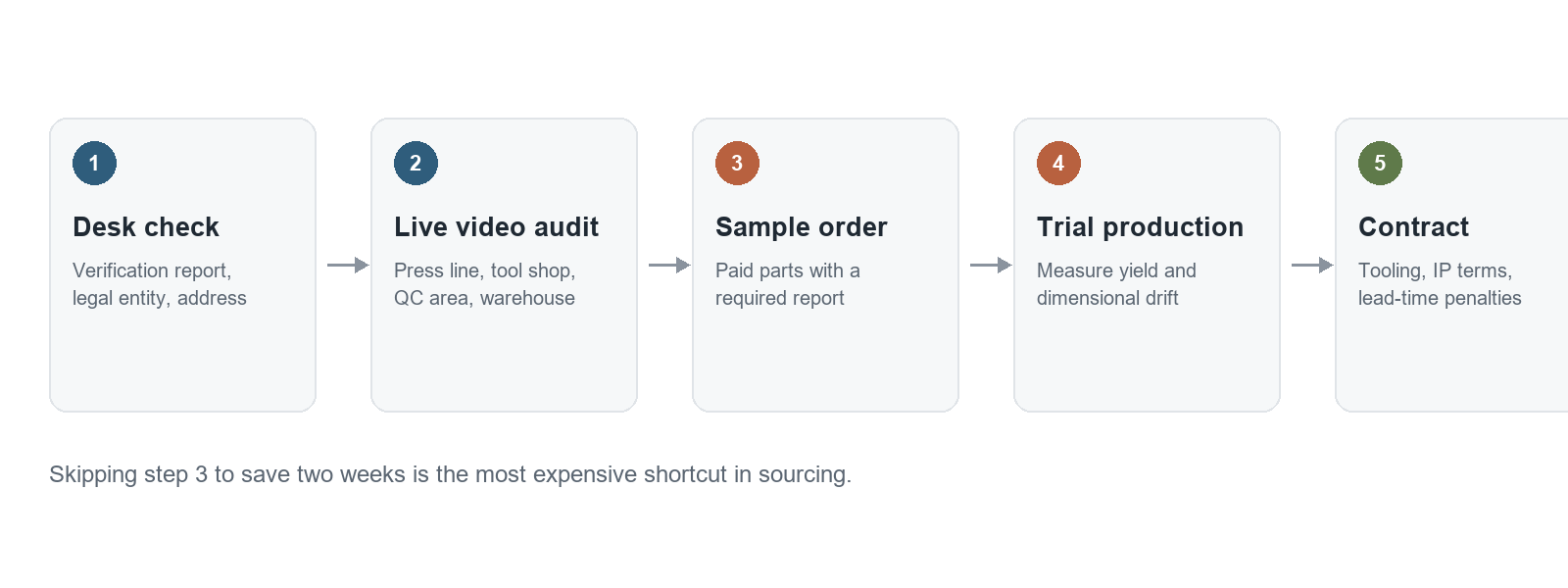
Figure 2. Verification sequence — step 3 is the one buyers skip.
How do I know if a Chinese silicone supplier is a real factory? Ask for an onsite verification report, then request a live video walkthrough of the molding floor and tool shop. Confirm the legal entity on the report matches your contract and the address matches the production site.
What is a normal MOQ for custom silicone parts? For custom molded silicone, MOQ commonly ranges from 100 to 2,000 pcs depending on the part and whether new tooling is required. Simple parts can start lower; complex multi-cavity tools usually start higher.
How long should sampling take? Simple silicone parts typically sample in 3–7 days; silicone keypads commonly take 10–15 days because of the additional conductive and backlight layers.
Should I pay for tooling separately? Yes, and you should own it. A separately invoiced tool with a written ownership clause is safer than "free tooling," which is amortized into the unit price and often stays with the factory.
How do I protect my design? Sign an NDA before sending drawings, specify tooling and drawing ownership in the contract, and require written consent for any subcontracting.
Is a lower price worth switching suppliers? Only after the new supplier passes sample and trial production. A 10% price difference is easily erased by one failed batch or a two-week delay.
About Xiamen Yidexin Silicone Rubber Industrial Co., Ltd. Founded in 2004 in Xiamen, China, Yidexin has more than 20 years in silicone rubber manufacturing. The factory runs 10 production lines with 50+ QC staff and a monthly capacity of over 1,000,000 pcs for silicone keypads and 200,000 pcs for silicone watches. Total staff 109, including 5+ certified engineers with 5+ years of experience. Intertek onsite verified in January 2026. Hardness range 20–80 Shore A; MOQ 100–2,000 pcs; sampling 3–7 days for parts. See the factory or contact us.

2F/YISHENG BUILDING,1ST INDUSTRIAL ZONE,DIANQIAN,HULI DISTRICT,XIAMEN CITY,CHINA
86-592-5659128 (to8016)
+86-592-5785493
+86-13850076578
© 2016 XIAMEN YIDEXIN SILICONE RUBBER INDUSTRIAL CO.,LTD Todos los derechos reservados dyyseo.com
Online Contact
 86-592-5659128 (to8016)
 anna@xmydx.com
 +8613606037597+8613850076578
top