86-592-5659128 (to8016)
anna@xmydx.com English
 Deutsch
 español

20 YEARS Silicone manufacturer
86-592-5659128 (to8016)
anna@xmydx.com
20 YEARS Silicone manufacturer



2026-11-06 11:42:37
Short answer: "Food-grade" silicone means a platinum-cured, filler-free silicone that has passed food-contact migration testing for the market you sell into. In the US that means compliance with FDA 21 CFR 177.2600; in Germany, LFGB testing with silicone assessed under BfR Recommendation XV; in the EU, Council of Europe Resolution AP(2004)5. A supplier's claim is only worth the test report behind it — and the report must be verifiable by number, from a recognized lab, with your material and test conditions named.
There is no such thing as "FDA-approved silicone." The FDA does not approve food-contact materials; it sets extraction limits that a material either meets or does not.
• Food grade = platinum-cured, filler-free, post-cured, and tested as a finished part.
• The US needs FDA 21 CFR 177.2600; Germany needs LFGB / BfR XV; the EU references AP(2004)5. Most exporters need two reports.
• A compound certificate does not prove the finished part passes migration testing.
• Check report number, lab, sample description, standard and test conditions before accepting any PDF.
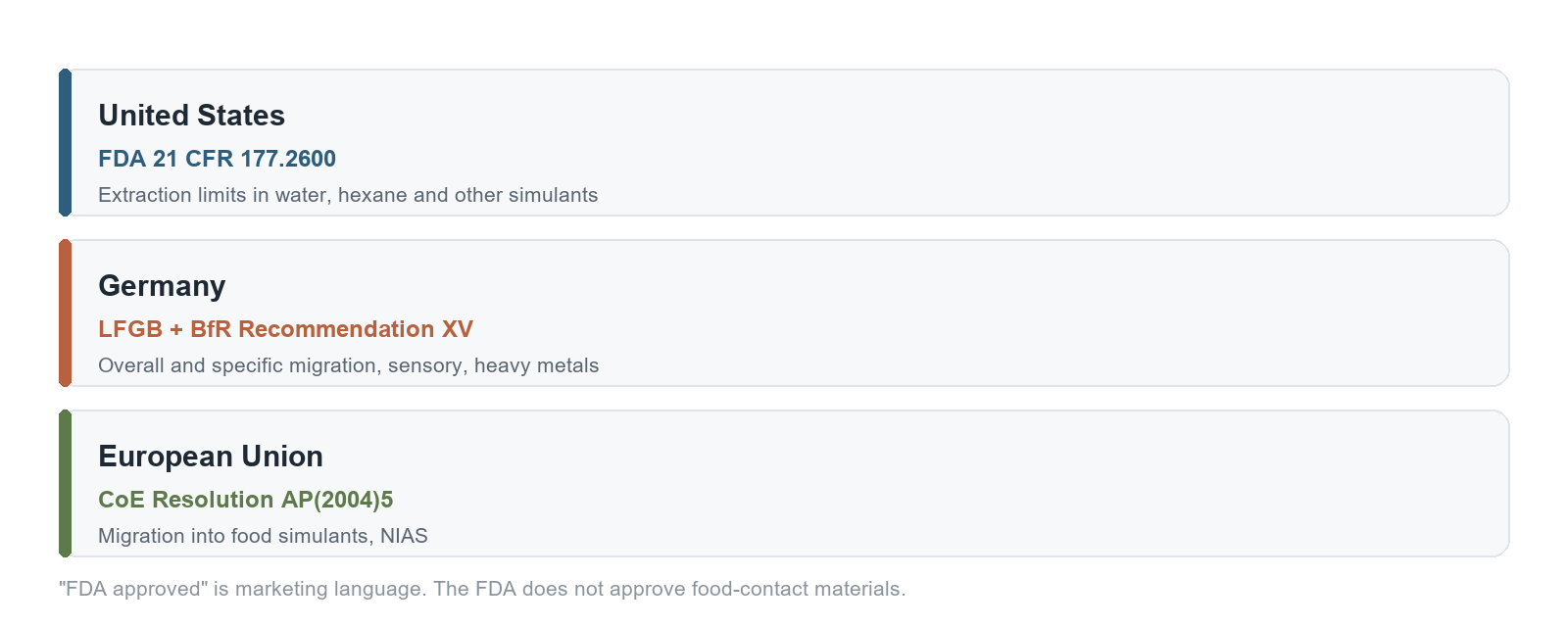
Figure 1. Three frameworks, three markets — most exporters need two reports.
Four things have to be true at the same time:
1. The base polymer is platinum-cured (addition cure). Peroxide-cured silicone can leave breakdown byproducts that fail odor and migration tests.
2. The compound contains no non-compliant fillers or plasticizers. Cheap "silicone" is sometimes extended with fillers that migrate.
3. The part is post-cured. Post-curing drives off volatile siloxanes that would otherwise show up as migration or odor.
4. The finished part passes migration testing under the regulation for your target market.
A material certificate proves point 1 and 2 at the compound level. Only a finished-part test report proves point 4 — and that is the one buyers usually forget to ask for.
|
Market |
Framework |
What is tested |
Notes |
|
United States |
FDA 21 CFR 177.2600 — rubber articles for repeated use |
Extraction limits in distilled water, hexane, and other simulants, by duration and temperature |
Applies to the finished article, not the raw compound |
|
Germany |
LFGB, with silicone assessed under BfR Recommendation XV |
Overall and specific migration, sensory (odor/taste), heavy metals |
Widely used as a de facto European benchmark |
|
European Union |
Council of Europe Resolution AP(2004)5 |
Migration into food simulants, NIAS considerations |
National implementations vary; Germany is the common test route |
If you sell into the US and the EU, you generally need two reports, not one. A single "FDA + LFGB" PDF that names neither the simulant nor the test duration is not sufficient for either.
|
Document |
What it proves |
What it does not prove |
|
Material datasheet / compound certificate |
The raw compound's formulation class and cure system |
That your finished part passes migration |
|
FDA 21 CFR 177.2600 test report |
Finished article passes US extraction limits |
EU compliance |
|
LFGB / BfR XV test report |
Finished article passes German migration and sensory tests |
US compliance |
|
Heavy metal / REACH report |
Restricted substances are below limits |
Food-contact suitability on its own |
|
Migration test with named simulants |
Performance under realistic use (fatty, aqueous, acidic) |
Anything, if the simulant does not match your food type |
|
Post-cure declaration |
Volatiles were driven off |
That the part was actually post-cured — verify by audit |
The most common gap: a supplier sends a compound certificate and calls it food-grade. Ask explicitly for the finished-part report with your part number or a materially identical reference part.
Six checks, in order:
1. Report number and issuing lab. SGS, Intertek, TÜV, BV and Eurofins reports can be verified by number on the lab's site. A report with no number, or with a lab you cannot find, is not evidence.
2. Sample description. Does it name the actual material and part (color, hardness, part number)? "Silicone sample" is not traceable.
3. Standard cited. The report should name FDA 21 CFR 177.2600, LFGB §30/§31 with BfR XV, or AP(2004)5 — not "food grade standard."
4. Test conditions. Simulant, temperature, and duration must be stated. A 4-hour water test does not cover a repeated-use baking mat.
5. Date and validity. Reports are tied to a formulation and a process. A report from 2016 for a compound you no longer buy proves nothing.
6. Result table, not a conclusion. Look for measured values against limits. A page that only says "PASS" with no numbers is a marketing document.
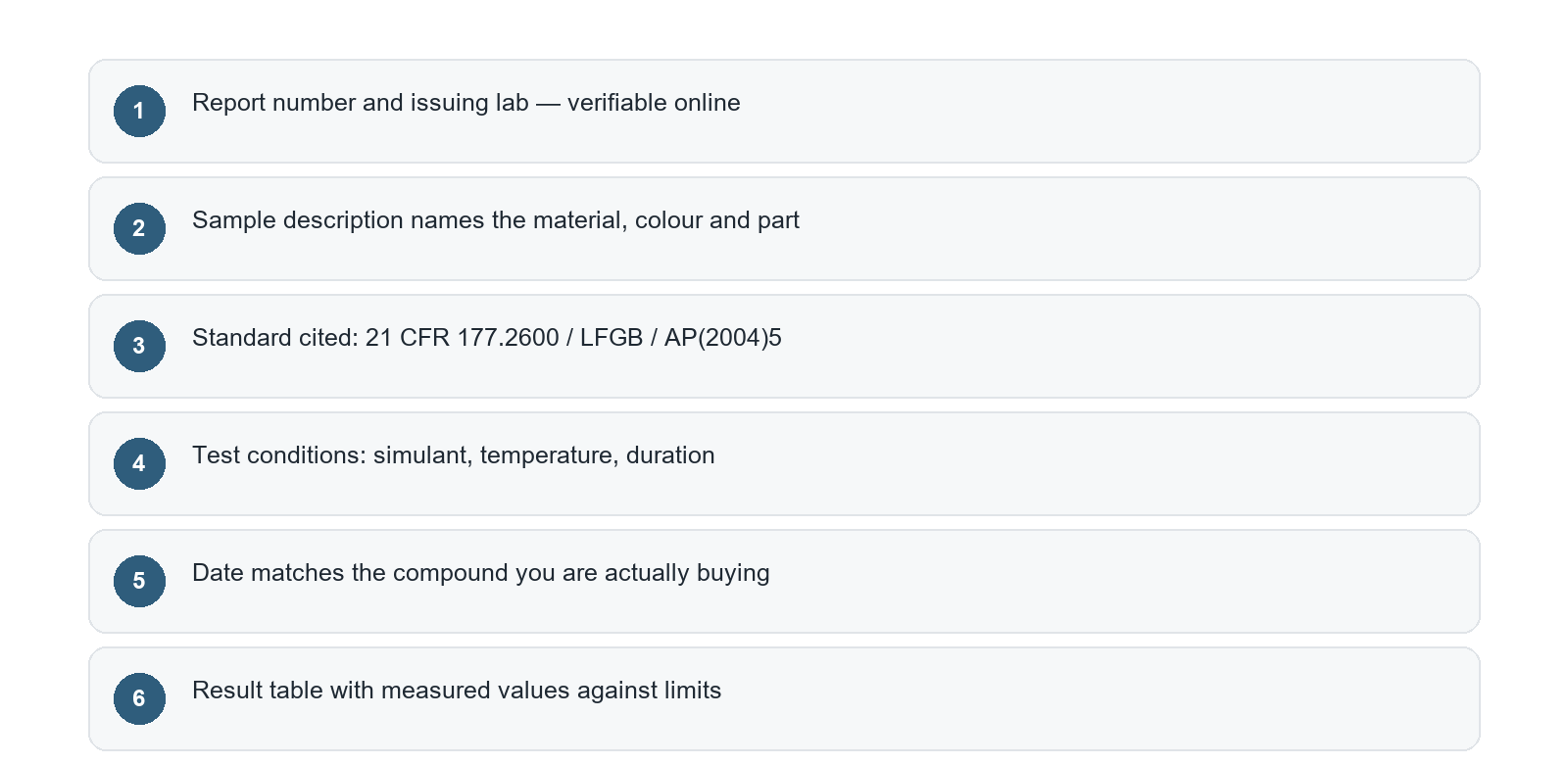
Figure 2. Six checks before you accept a test report.
Platinum-cured silicone releases volatile siloxanes during and after cure. Post-curing — a controlled elevated-temperature bake — drives them off. Skip it and you get:
• Odor and taste transfer in food applications
• Higher volatile migration in testing
• Fogging on sealed packaging
• Complaints that appear only after the product has been in a hot truck
Post-curing also slightly shifts hardness and stabilizes compression set. Ask whether the quoted hardness is measured before or after post-cure; the difference is small but real.
For baby products, the stakes are higher: odor and taste are the first thing a parent notices, and a failed sensory test is a recall risk, not a rework.
Copy this into your PO and your supplier relationship gets measurably safer:
• Material: platinum-cured silicone, no non-compliant fillers
• Compliance: FDA 21 CFR 177.2600 and/or LFGB (BfR XV) for the finished part
• Test report: to be provided before shipment, from a recognized third-party lab, naming the part number and color
• Post-cure: required, with the cycle recorded
• Odor/taste: sensory evaluation per the applicable standard
• Change control: no compound or process change without written notice and re-testing
• Retained samples: kept for a defined period per lot
The change-control clause is the one most buyers omit, and the one that causes the most expensive surprises. A compound swap that is "equivalent" can void your test report overnight.
Is FDA-approved silicone a real thing? No. The FDA does not approve food-contact materials. A supplier can say a material is "compliant with FDA 21 CFR 177.2600," which is a testable claim. "FDA approved" is marketing language.
Is food-grade silicone the same as medical-grade silicone? No. Medical-grade typically requires additional biocompatibility testing (ISO 10993 series) and tighter process controls. A food-contact report does not substitute for biocompatibility data.
Is silicone BPA-free? Silicone does not contain bisphenol A, so it is inherently BPA-free. That is a property of the material, not a certification — asking for a "BPA-free certificate" for pure silicone is mostly theater.
Can silicone go in the dishwasher and oven? Food-grade silicone generally tolerates dishwasher cycles and oven use within its rated temperature range. The rating belongs to the specific compound — ask for it rather than assuming.
Why does cheap silicone smell? Usually a peroxide cure system, insufficient post-curing, or a filler-extended compound. Odor is a useful early warning sign in a sample.
How long is a test report valid? There is no fixed expiry, but a report is only valid for the formulation, color, and process it was issued against. If any of those change — or if the report is several years old and the supplier has changed compounders — re-test.
About Xiamen Yidexin Silicone Rubber Industrial Co., Ltd. Yidexin produces food-contact and baby-care silicone parts with platinum-cured compounds and post-curing, supported by third-party test reports. Founded in 2004 in Xiamen, China, the factory runs 10 production lines with 50+ QC staff and 5+ certified engineers; Intertek onsite verified in January 2026. Hardness 20–80 Shore A; MOQ 100–2,000 pcs; sampling 3–7 days. See silicone baby supplies, household supplies, or request compliance documents.

2F/YISHENG BUILDING,1ST INDUSTRIAL ZONE,DIANQIAN,HULI DISTRICT,XIAMEN CITY,CHINA
86-592-5659128 (to8016)
+86-592-5785493
+86-13850076578
© 2016 XIAMEN YIDEXIN SILICONE RUBBER INDUSTRIAL CO.,LTD Todos los derechos reservados dyyseo.com
Online Contact
 86-592-5659128 (to8016)
 anna@xmydx.com
 +8613606037597+8613850076578
top